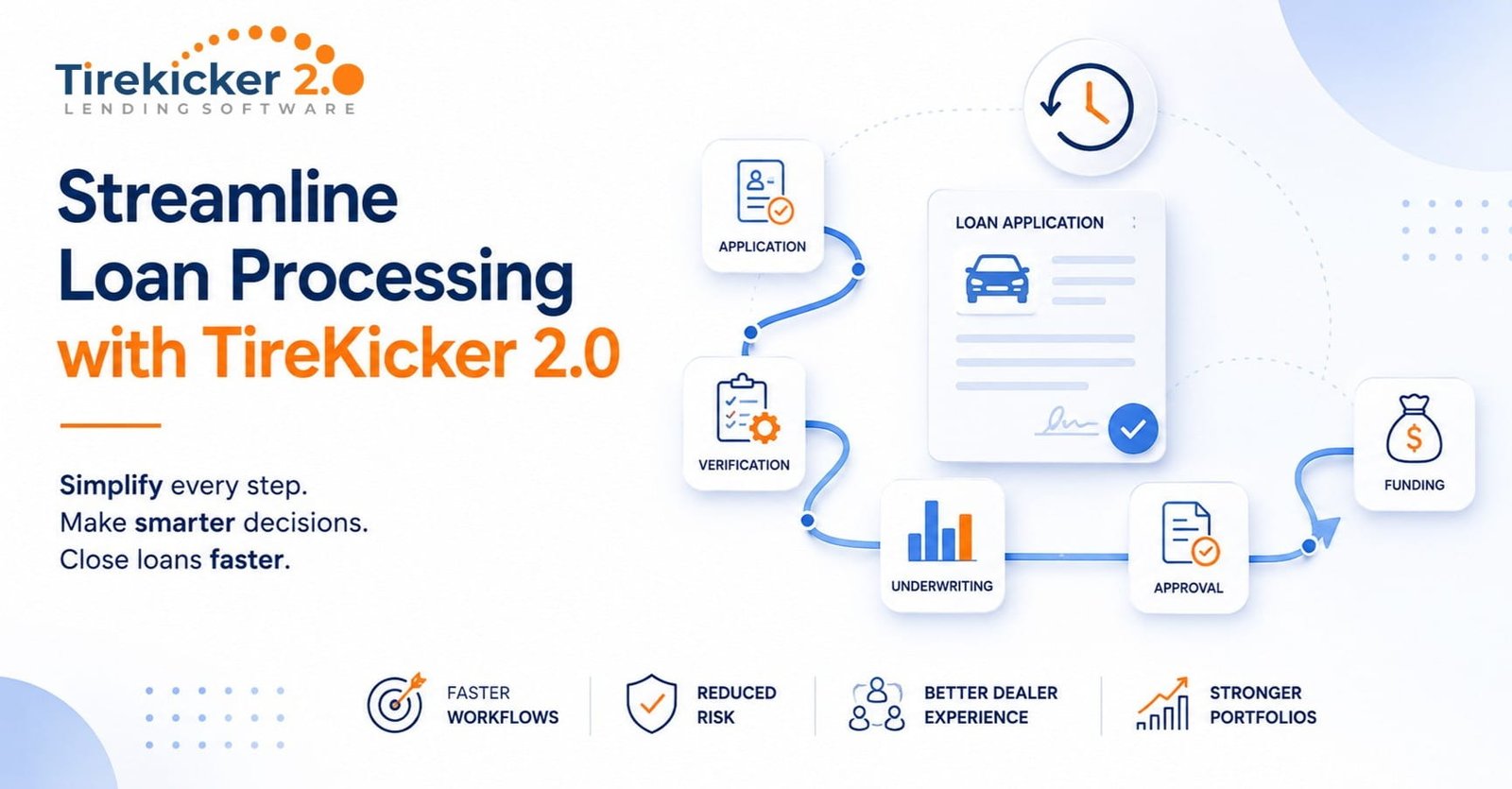
Automotive lending involves more than approving loans and tracking balances. For floor-plan lenders, day-to-day operations can include managing dealer relationships, advances, vehicle inventory, payments, titles, collateral, audits, compliance, and reporting.
When these processes depend heavily on spreadsheets, emails, paper documents, and disconnected systems, manual work can quickly become a bottleneck. Employees may spend hours entering the same information, reconciling records, preparing reports, or tracking collateral instead of focusing on higher-value lending activities.
The good news is that automotive lenders can reduce much of this administrative workload by using automation and centralized lending technology.
TireKicker 2.0 is designed specifically for floor-plan lending operations, bringing loan and inventory management, billing and payments, audits, reporting, and title and collateral management into a cloud-based platform.
Why Manual Loan Processing Creates Challenges for Automotive Lenders
Manual processing may work when a lending operation is small. As the number of dealers, vehicles, advances, and transactions increases, however, administrative complexity can grow quickly.
Some of the most common challenges include:
Repetitive Data Entry
Lending teams may need to enter or update dealer, loan, vehicle, payment, and collateral information across multiple systems. Repeated data entry consumes employee time and increases the possibility of inconsistent information.
Spreadsheet Dependency
Spreadsheets can be useful for individual tasks, but using them as the primary system for managing a growing floor-plan portfolio can make information difficult to centralize and maintain.
Manual Reconciliation
Teams may spend significant time comparing loan balances, payments, advances, inventory records, and other information to make sure everything matches.
Time-Consuming Audits
Floor-plan lenders need visibility into dealer inventory and collateral. When audit information must be gathered manually, preparing for audits can become a significant administrative task.
Limited Operational Visibility
When important information is spread across spreadsheets, documents, emails, and separate applications, it can be difficult for lending teams to get a complete view of a dealer, loan, or vehicle.
What Parts of Automotive Loan Processing Can Be Automated?
Automation doesn’t mean eliminating human involvement from lending decisions. Instead, it means allowing technology to handle repetitive and rules-based activities while employees focus on judgment, relationships, risk management, and growth.
For automotive and floor-plan lenders, several areas can benefit from automation.
Loan and Advance Management
Managing advances is a core part of floor-plan lending. A centralized system can help lenders maintain organized records of loan activity and make it easier to understand the relationship between loans, dealers, and financed vehicles.
Vehicle and Inventory Tracking
Because vehicles serve as collateral in floor-plan lending, lenders need accurate visibility into inventory.
Automated inventory management can help teams track financed vehicles and connect inventory information with the appropriate dealer and loan records.
Billing and Payment Processing
Billing and payment activities can involve recurring administrative work. Automating these workflows can reduce the amount of time employees spend creating, updating, tracking, and reconciling payment information.
Audits and Compliance
Audit and compliance activities are another area where consistent workflows can make a difference. Instead of relying entirely on manual checklists and spreadsheets, lenders can use technology to organize information and standardize processes.
Title and Collateral Management
Titles and other collateral information require careful tracking. Centralized collateral management can make it easier for teams to monitor important information without searching through multiple systems or documents.
Reporting
Generating reports manually can take significant time, particularly when information comes from several sources. Automated reporting can give lending teams faster access to operational information and reduce repetitive report preparation.
7 Ways Automotive Lenders Can Reduce Manual Loan Processing
Automation can have the greatest impact when lenders focus on the processes that consume the most time. Here are seven practical ways automotive lenders can reduce manual work.
Replace Spreadsheets With a Centralized Lending System
Spreadsheets aren’t inherently problematic. The challenge comes when they become the primary tool for managing complex lending operations.
As a portfolio grows, lenders may have separate spreadsheets for dealers, vehicles, payments, advances, audits, and reporting. Keeping those files synchronized can become difficult.
A centralized lending platform provides a single environment for managing critical information.
Instead of asking, “Which spreadsheet has the latest information?” employees can access the relevant records within the lending system. For floor-plan lenders, this centralized approach can be particularly valuable because loan information and vehicle inventory are closely connected.
Automate Repetitive Data Entry
One of the simplest ways to reduce manual processing is to minimize repetitive data entry.
When employees repeatedly enter the same information into different systems, the process takes longer and creates additional opportunities for errors.
Automation can help by allowing information to flow through connected workflows instead of requiring employees to re-enter it at every stage.
The result can be:
- Less repetitive administrative work
- More consistent information
- Fewer manual updates
- More time for employees to focus on lending activities
Centralize Loan and Vehicle Information
Automotive lenders need visibility into more than just outstanding loan balances.
They may also need to know which vehicles are financed, which dealer they belong to, how advances relate to inventory, and what collateral information is associated with a particular account.
Centralizing these records can make it easier to access information and understand the complete lending relationship.
TireKicker 2.0 brings loan and inventory management together so lenders can track advances, vehicles, and dealers within one platform.
Streamline Billing and Payment Workflows
Billing and payments can create a steady stream of administrative tasks for lending teams.
Manually managing these activities can require employees to update records, track payments, reconcile information, and prepare financial reports.
Automating billing and payment workflows can reduce repetitive work and provide greater consistency across the portfolio.
The goal isn’t simply to process payments faster. It’s to reduce the number of manual steps employees need to perform throughout the process.
Make Audits and Compliance More Efficient
Audits are an important part of floor-plan lending because lenders need to verify inventory and maintain appropriate oversight of collateral.
When audit preparation relies heavily on manual processes, employees may spend significant time gathering information, checking records, and preparing documentation.
A technology platform can help organize these workflows and make audit activities more consistent.
TireKicker 2.0 includes audit and compliance capabilities designed to help floor-plan lenders streamline these operational processes.
Improve Title and Collateral Tracking
Collateral management is another area where manual processes can create unnecessary complexity.
Titles and collateral records need to remain organized and accessible. If information is spread across paper files, spreadsheets, and separate systems, employees may have to spend additional time locating and verifying information.
A centralized title and collateral management workflow can give lenders better visibility while reducing administrative effort.
Automate Reporting and Improve Visibility
Reporting shouldn’t require employees to spend hours collecting information from multiple sources and manually formatting it.
Automated reporting can give lenders faster access to the information they need to monitor operations, review portfolio activity, and make informed decisions.
Better visibility can also help management identify trends and operational issues earlier.
The more information that can be accessed from a centralized system, the less time employees need to spend compiling it manually.
Benefits of Automating Automotive Loan Processing
Reducing manual processing isn’t only about saving a few administrative hours. For growing lenders, automation can influence the overall efficiency and scalability of the operation.
Reduce Administrative Work
Automating repetitive activities allows employees to spend less time on data entry, reconciliation, reporting, and other routine tasks.
Improve Data Consistency
Centralized information and standardized workflows can reduce the risk of inconsistent records caused by repeated manual entry.
Increase Operational Efficiency
When fewer manual steps are required, routine processes can move more efficiently through the organization.
Improve Visibility
A centralized system can make it easier for employees and managers to access information about loans, dealers, vehicles, payments, and collateral.
Support Growth
As lending volume increases, manual processes can become increasingly difficult to manage. Automation can help lenders handle growing operational demands without increasing administrative work at the same rate.
What Should Automotive Lenders Look for in Lending Software?
Not every lending platform is designed for the unique requirements of floor-plan lending.
When evaluating automotive lending software, lenders should consider whether the platform supports the complete lending workflow.
Important capabilities may include:
- Loan and advance management
- Vehicle and inventory management
- Billing and payment processing
- Audit and compliance workflows
- Title and collateral management
- Reporting and operational visibility
- Cloud-based accessibility
- Scalability as the lending operation grows
Purpose-built software can be especially valuable because it is designed around the specific relationships between dealers, loans, vehicles, inventory, and collateral.
How TireKicker 2.0 Helps Reduce Manual Loan Processing
TireKicker 2.0 is built specifically for floor-plan lenders that want to modernize and streamline their lending operations.
Instead of relying on disconnected tools for different parts of the process, TireKicker 2.0 brings key lending workflows together in one cloud-based platform.
Loan and Inventory Management
TireKicker 2.0 helps lenders manage loan and inventory information while maintaining visibility into advances, vehicles, and dealers.
Billing and Payment Processing
Financial workflows can be managed within the platform, helping reduce repetitive administrative activities associated with billing and payments.
Audit and Compliance
Built-in audit and compliance functionality helps lenders create more consistent processes and reduce reliance on manual tracking.
Title and Collateral Management
TireKicker 2.0 also provides tools for managing titles and collateral, helping lenders keep important information organized and accessible.
Cloud-Based Access
As a cloud-based SaaS platform, TireKicker 2.0 gives lending teams access to their lending operations without relying on traditional, disconnected systems.
How to Get Started With Loan Processing Automation
Automating every process at once isn’t necessary. A more practical approach is to identify the areas where manual work is creating the biggest operational burden.
Start by asking:
- Which processes require the most repetitive data entry?
- Which tasks rely heavily on spreadsheets?
- Where do employees manually reconcile information?
- Which reports take the most time to prepare?
- Which audit or collateral processes are difficult to track?
- Where are employees spending time searching for information?
Once these areas are identified, lenders can prioritize high-volume, repetitive workflows for automation.
It can also be useful to measure results before and after automation. Metrics such as processing time, administrative hours, reporting time, audit preparation time, and data corrections can help demonstrate the operational impact of modernization.
Conclusion
Manual loan processing can become a significant operational challenge as automotive lenders grow. Repetitive data entry, spreadsheet management, payment tracking, audits, collateral management, and reporting can consume valuable employee time and make it harder to scale efficiently.
The solution isn’t to remove people from the lending process. It’s to give them better technology.
By centralizing loan and inventory information and automating repetitive workflows, automotive lenders can reduce administrative work, improve visibility, and create more efficient lending operations.
TireKicker 2.0 provides a purpose-built platform for floor-plan lenders, bringing loan and inventory management, billing and payments, audits, reporting, and title and collateral management together in one cloud-based solution.
If your lending team is spending too much time managing manual processes, it may be time to consider a more automated approach.
Explore TireKicker 2.0 to see how modern lending technology can help streamline your floor-plan lending operation.
Frequently Asked Questions
What is automotive loan processing?
Automotive loan processing includes the activities involved in managing automotive lending, from loan and advance management to payments, inventory, collateral, audits, and reporting. For floor-plan lenders, the process also involves tracking vehicles financed for automotive dealers.
How can automotive lenders reduce manual loan processing?
Lenders can reduce manual processing by centralizing loan information, automating repetitive data entry, streamlining billing and payments, improving inventory and collateral tracking, and automating audit and reporting workflows.
What tasks can automotive lending software automate?
Depending on the platform, automotive lending software can support loan and advance management, vehicle inventory tracking, billing, payments, audits, compliance, reporting, title management, and collateral workflows.
What is floor-plan lending software?
Floor-plan lending software is designed to help lenders manage financing provided to automotive dealers for vehicle inventory. It can connect loan activity with dealers, vehicles, inventory, payments, audits, and collateral.
How does automation improve automotive lending operations?
Automation can reduce repetitive administrative work, improve data consistency, provide better visibility into lending activity, streamline workflows, and help lenders scale their operations more efficiently.
What should automotive lenders consider when choosing lending software?
Lenders should evaluate whether software supports their specific floor-plan lending workflows, including loan and inventory management, billing and payments, audits, compliance, title and collateral management, reporting, security, cloud accessibility, and scalability.


